
In Agen, the Rodrigues housing estate is in the midst of a critical situation. Faced with the risk of carbon monoxide poisoning, Agen Habitat officials have taken the unprecedented decision to shut down 300 boilers in the estate. This massive shutdown, resulting from the detection of worrying emissions of this toxic gas, highlights the urgency and seriousness of the situation in the middle of winter. To ensure the safety of tenants, rapid action is required, including the installation of auxiliary heating and the implementation of a major health and technical action plan. This crisis highlights the challenges associated with the renovation of social housing and the prevention of carbon monoxide hazards in collective housing.
This radical decision, taken following several alerts and incidents of poisoning, comes at a time when the Rodrigues housing estate is undergoing major renovation work. The scale of the problem extends far beyond the attic flats, affecting various floors and revealing potential flaws in the flue gas evacuation systems. With the festive season approaching and the cold weather setting in, comfort and safety issues are becoming increasingly important. This dramatic scenario illustrates the importance of prevention and continuous monitoring of heating systems to prevent the threat of carbon monoxide from turning into a tragedy.
The challenges of shutting down boilers in Agen: safety and prevention in the face of carbon monoxide
The shutdown of 300 boilers in the Rodrigues housing estate in Agen is an exceptional safety measure designed to protect 340 tenants from an immediate and serious risk. Carbon monoxide (CO), a toxic gas undetectable by our senses, is the leading cause of death by poisoning in France. Its presence in the homes was the result of unexplained leaks during renovation work. As soon as the CO was detected, Agen Habitat triggered a crisis plan, demonstrating that prevention takes precedence over temporary thermal comfort.
Why was this decision made? Initial analyses had initially identified the problem in around a hundred penthouse apartments. However, the fire brigade's response to cases of poisoning pointed to a more widespread problem affecting several floors. The discovery of a leak in the flue gas exhaust ducts, suspected to be the source of the emissions, led to a large-scale shutdown as a precautionary measure.
This outage caused a breakdown in heating and hot water for the occupants, a real challenge as winter is in full swing. To compensate, space heaters have been deployed urgently, with more than 400 devices ordered. As Jean Bizet, director of Agen Habitat, points out, «We cleared out the supermarkets» to respond to the emergency, and an additional order was placed in Montauban. This mobilisation demonstrates the priority given to health and safety.
At the same time, Seg-Fayat teams responsible for the renovation project are working with Agen Habitat to speed up the commissioning of the District Heating Network (RCU), which uses a much safer urban hot water source and could gradually replace individual gas boilers. This energy transition, initially planned over a longer timeframe, is now being brought forward in order to reduce the risks associated with gas heating as quickly as possible.
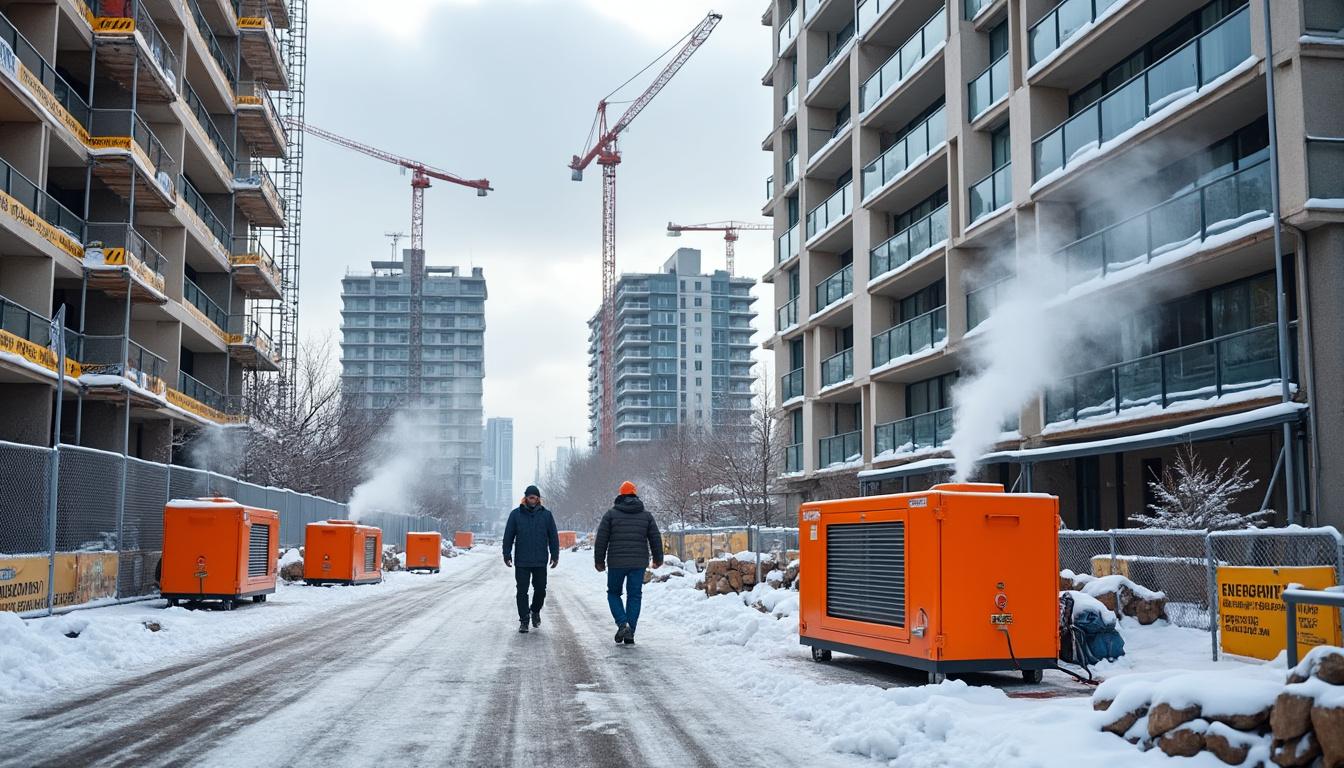
The technical and human causes of the crisis: understanding how boilers work and the risks involved in multi-unit dwellings
To understand this crisis in Agen, it is essential to understand how individual boilers work in a multi-unit building and the dangers of carbon monoxide that they can generate. In 2025, many social housing units still operate with gas boilers, which require proper maintenance and perfect evacuation of combustion gases.
Carbon monoxide is formed when combustion is incomplete, usually due to poorly maintained equipment or a blocked or leaking exhaust pipe. In the Rodrigues housing estate, major work on the heating system may have compromised the airtightness of the pipes, facilitating CO leakage. In addition, the initial technical response, which was to equip the dwellings with controlled mechanical ventilation (CMV), proved insufficient because the emissions affected rooms far from the equipment, such as bathrooms.
These factors point to a complex structural problem linked to the age of social housing stock and the complexity of upgrading it. If not carried out to perfection, renovation work can increase risks. This is a striking example that reminds all social housing managers of the importance of monitoring flue gas extraction systems and rigorously checking safety devices.
In the context of this crisis, collaboration between the various parties involved is crucial: the social housing office, the construction company Seg-Fayat, the fire brigade and the Regional Health Agency (ARS) must ensure optimal coordination to limit the risk of poisoning and restore decent living conditions. For tenants, this is a period of anxious waiting, with the stress of having their heating cut off and the uncertainty of how the situation will rapidly evolve.
Emergency measures and temporary solutions for tenants of the Rodrigues housing estate
Faced with the boiler shutdown, Agen Habitat responded quickly and pragmatically to ensure health and safety without leaving residents without any source of heating or hot water. The first step was to store and distribute 200 space heaters, a number that was increased to 400 due to the critical size of the housing estate. These mobile radiators are essential to at least partially compensate for the boiler shutdown, especially during the winter months.
These temporary solutions, although essential, have limitations in terms of efficiency, cost and comfort. They also involve complex logistics, with agents sent out daily to deliver, install and monitor the proper use of auxiliary heaters. In addition, the lack of domestic hot water poses a double constraint for families, which will soon be addressed by the installation of electric water heaters.
Agen Habitat has announced a series of compensatory measures for tenants, including temporary reductions in rent, emphasising their commitment to dealing with the issue fairly. This decision aims to acknowledge the inconvenience caused, while maintaining a climate of trust between the landlord and tenants. This type of intervention highlights the importance of prevention, but also the importance of responsiveness when a health alert occurs.
It is also planned that the teams on site will ensure clear and regular communication with residents. A crisis command centre (PC de crise) has been set up in the neighbourhood to facilitate this direct consultation and answer questions. This emergency system promotes the effective coordination of medical, technical and social interventions, which are essential for overcoming this crisis while minimising its impact.
Towards sustainable regeneration: the implementation of the district heating network and the future of housing in Agen
One of the structural responses to this problem lies in the accelerated connection of Rodrigues City to the Urban Heating Network (RCU). This innovative network uses safe, environmentally friendly urban hot water and eliminates the use of individual gas boilers, which are the main vectors of CO poisoning risk.
This project, initially planned over a longer timeframe, has been promoted by Agen Habitat and Seg-Fayat as a sustainable solution guaranteeing modern safety and comfort to tenants. Even if full commissioning before the holidays seems unattainable, this acceleration demonstrates the ability of local players to adapt in the face of a major crisis.
The energy renovation of social housing goes beyond simply replacing equipment. It must guarantee an improved quality of life and a reduction in health risks. The case of the Rodrigues housing estate will therefore serve as an example for the future management of carbon monoxide incidents in Lot-et-Garonne and elsewhere. The lessons learned will help to optimise safety standards and encourage an energy transition that respects the health of residents.
There is still a long way to go before things return to normal, but vigilance, combined with accelerated innovation in RCU, is the key to safer collective housing. Tenant safety remains the top priority.
| 🛠️ Measures taken | 🔧 Details | ✅ Objective |
|---|---|---|
| Neutralisation of boilers | 300 boilers shut down as a precaution | Reducing the risk of carbon monoxide emissions |
| Distribution of auxiliary heaters | 400 mobile radiators installed | Providing temporary heating for tenants |
| Electric water heater installation | Coming soon to compensate for the loss of hot water | Maintaining sanitary comfort |
| Connection to the RCU | Acceleration of connection works | Transition to safer and more sustainable heating |
| Compensatory measures | Announced reduction in rents | Compensation for tenants |
- ⚠️ Enhanced surveillance: monoxide detector installations and alarms
- 🚨 Rapid response: detection and immediate shutdown of suspicious boilers
- 🔥 Auxiliary heating: temporary solutions to ensure comfort
- 🔧 Maintenance: systematic inspection of drainage pipes
- 🌡️ Innovative refurbishment: acceleration of connection to the RCU
What is carbon monoxide and why is it dangerous?
Carbon monoxide is an odourless, colourless and toxic gas produced by incomplete combustion. It is dangerous because it binds to haemoglobin and prevents the transport of oxygen in the body, which can lead to serious or even fatal poisoning.
How did Agen Habitat manage the boiler shutdown?
Agen Habitat shut down 300 boilers to prevent any risk of poisoning. At the same time, more than 400 auxiliary heaters were distributed, a crisis centre was set up, and rent reductions were announced to support tenants during this difficult period.
What are the long-term solutions for securing heating in the Rodrigues neighbourhood?
The acceleration of connection to the District Heating Network (DHN), using secure urban hot water, is the sustainable solution envisaged to replace individual boilers and reduce the risk of carbon monoxide emissions.
How can you prevent carbon monoxide poisoning in your home?
Heating appliances must be regularly maintained, good ventilation must be ensured, carbon monoxide detectors must be installed, and combustion appliances must never be used in unventilated spaces.
Why did the situation in the Rodrigues housing estate deteriorate?
The combination of major construction work and a leak in the exhaust pipes allowed carbon monoxide to seep into several flats, creating a dangerous situation and requiring the boilers to be shut down across the board.
 English
 French
 Spanish
 German
 Dutch
 Italian
 Portuguese