
In the streets of Tours, the incessant ballet of Fil Bleu buses is part of a frantic race against time. Every minute counts in this city, where urban transport is vital to the daily mobility of thousands of residents. Bus drivers are constantly juggling with traffic management to keep to strict timetables and maintain service quality. But when traffic becomes dense, and cyclists and other road users start mingling in the reserved lanes, the tension mounts and the race against the clock intensifies. Find out how these professionals live and deal with the pressure in this dynamic city, where every journey is a challenge.
In brief:
- 🚍 Fil Bleu bus drivers in Tours have to manage often disabling traffic while keeping to tight schedules.
- ⏳ Time management is crucial to ensuring the continuity of urban transport and the mobility of users in the city.
- 🚦 Mixing with other users such as cyclists in dedicated lanes complicates the flow of traffic.
- 📉 Frequent disruption due to heavy traffic and unexpected behaviour by motorists and cyclists.
- 🕒 The stress and pressure on drivers, who have to close doors quickly and sometimes take risks to catch up.
- 📊 Detailed analysis of the constraints and solutions envisaged to improve punctuality and safety on the Fil Bleu network.
Fil Bleu bus drivers face the daily challenge of heavy traffic in Tours
Finding yourself at the wheel of a Fil Bleu bus in the centre of Tours often means engaging in a never-ending race against the traffic. Anthony Lefranc, an experienced driver on line 5 in the city centre, describes this double pressure perfectly: «At the start, it's the relative calm of Boulevard Heurteloup before plunging into the storm of traffic. At 4pm, it's time for the streets to start clogging up, and every traffic jam eats away at the precious minutes that need to be made up.»
This has a direct impact on bus punctuality, but also on driver morale. One of the major concerns is the mixing of transport vehicles and other users, particularly cyclists. The latter often have the right to use certain bus lanes, which, according to Anthony, «leads to unscheduled stops at traffic lights and slows down progress». The stress is constant, as each additional stop creates a domino effect on the whole line.
In this battle against time, time management has become a priority. Drivers close doors quickly, reduce passenger boarding time, and sometimes take bold decisions to compensate for delays, such as running an amber light when prudent to do so. This haste may seem fraught with risk, but it testifies to an undiminished determination to continue providing a reliable service despite the complicated conditions.
One obstacle follows another: traffic jams, interruptions caused by the unexpected behaviour of other users, and the pressure to keep to the timetable. This combination reveals the full complexity of mobility in an urban environment. It underlines the need for more sophisticated tools for dynamic traffic management, and for developments designed to maintain the fluidity of bus lanes within the city.
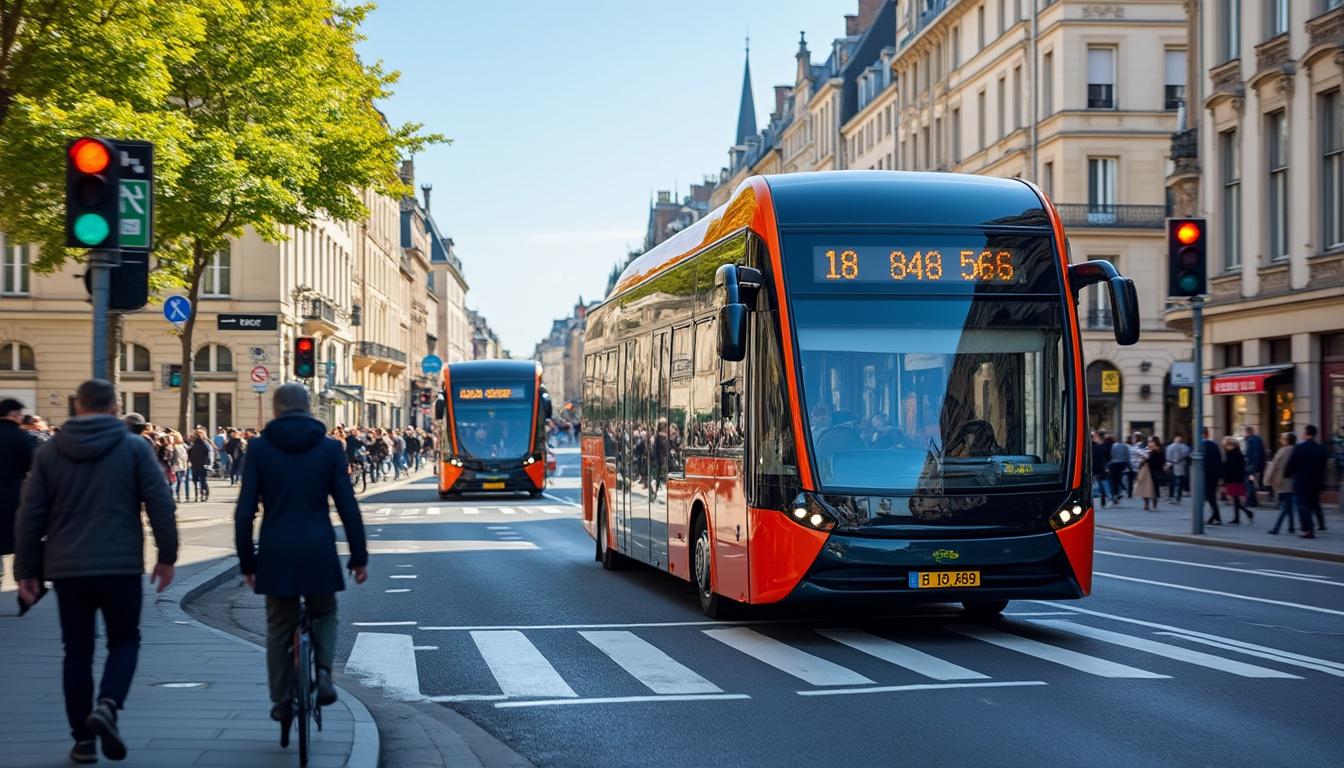
The crucial importance of urban transport for mobility in Tours
The Fil Bleu network is at the heart of Tours' urban transport system. It is not just a collection of buses and trams, but an essential mobility facilitator for tens of thousands of users every day. Whether they are commuters, students on their way to school or visitors exploring the city's historical treasures, urban transport is an essential lever.
The city of Tours, with its historic city centre and strategic roads, imposes multiple constraints in terms of traffic. The Fil Bleu network has to adapt to this complex reality and provide an effective response to facilitate travel while ensuring the safety and comfort of passengers. Strict timetables and high frequencies testify to this commitment to guaranteeing optimum mobility in the city, while limiting the environmental impact thanks to a harmonised public system.
For residents and metropolitan authorities alike, the ability to maintain regular, fast services is a key criterion. Traffic management and urban planning have a major influence on this capacity. This is why several projects are underway to rethink infrastructure, develop additional dedicated lanes, and modernise the technological means of real-time traffic control.
In essence, urban transport in Tours is not just a simple exchange of journeys between points A and B. It is part of an overall policy of sustainable mobility, integrated with the economic, social and environmental challenges facing the city. Bus drivers, at the forefront of this organisation, embody this complex and sensitive mission, which aims to make the city more accessible and enjoyable on a daily basis.
Time management strategies adopted by drivers in a frantic race against the clock
Faced with traffic constraints and the demands of a demanding system, Fil Bleu bus drivers are developing a number of strategies to optimise their time. Among these methods, rigorous control of stopping time at boarding and alighting points is often cited. Anthony Lefranc explains: «Every second counts, which is why we close the doors quickly as soon as the flow of passengers slows down.»
As well as reducing boarding time, drivers need to anticipate sensitive areas where traffic is likely to slow progress. They need to drive carefully but dynamically, trying to avoid traffic jams by keeping to the right lanes and taking advantage of pedestrian crossings and traffic lights. Even so, running through amber lights is a practice that is sometimes adopted to grab a few useful seconds, without compromising safety.
Here is a list of the main strategies used by Fil Bleu drivers to optimise their journeys:
- ⏩ Fast door closing to reduce downtime.
- 🚦 Adapting speed to traffic lights and congested roads.
- 🔍 Anticipation of dense traffic areas to avoid bottlenecks.
- 📲 Using real-time monitoring tools to adjust driving.
- ⚠️ Making quick decisions when delays occur, sometimes at the cost of moderately exceeding limits.
These practices, which are sometimes questionable, reflect the real pressure drivers are under. They also reflect a strong commitment to maintaining service quality despite an often unpredictable environment. The challenge is considerable: those who improvise themselves as drivers must succeed in combining prudence, efficiency and respect for the rules.
The consequences of the race against time on the safety and quality of urban transport
This frantic race against time naturally has repercussions on the safety of drivers and passengers, as well as on the quality of the overall service. The stress caused by simultaneously managing traffic, timetables and interactions with other road users can impair concentration. In some cases, this leads to risky behaviour, such as speeding up when approaching junctions or acting hastily when picking up and setting down passengers.
Studies carried out by Métropole and the transport company show a direct correlation between periods of heavy traffic and an increase in the number of minor incidents and delays. In 2025, for example, more than 60% Fil Bleu buses were more than 5 minutes late at peak times, a statistic that clearly illustrates the permanent tension in which drivers find themselves.
The consequences for users are palpable. The image of a reliable service is affected, and bus saturation leads to reduced satisfaction. The balance between speed and safety is therefore of paramount importance. Specific training is regularly given to drivers to help them manage this stress and prioritise safety, while meeting timetable requirements.
| 🔧 Appearance | 🚍 Impact | ⚡ Solution envisaged |
|---|---|---|
| Time management | Frequent delays, increased stress | Digital tools for real-time monitoring |
| Interactions with cyclists | Unscheduled slow-downs and stops | Creation of separate cycle lanes |
| Pressure pipe | Risk of incidents and fatigue | Enhanced training for drivers |
| Smooth traffic flow | Traffic jams affecting timetables | Urban facilities dedicated to buses |
Ultimately, it is essential to measure the consequences of this frantic race if we are to improve the quality of urban transport in Tours. At a time when users' expectations continue to rise, technological solutions and appropriate infrastructure are key to easing tensions and ensuring more peaceful transport.
Initiatives and prospects to improve mobility for Fil Bleu bus drivers in Tours
Faced with the many challenges it faces, the Tours metropolitan area has launched a number of initiatives to support drivers and improve the fluidity of urban transport. One of the priority areas is the closer integration of intelligent traffic management systems, which can be used to modulate bus priority by adjusting traffic lights in real time.
In addition, the development of new lanes dedicated exclusively to buses and the creation of separate cycle lanes are helping to relieve congestion on strategic routes such as boulevard Heurteloup and rue Giraudeau. These measures are in response to comments made by drivers, who often deplore the confusion created by cyclists using traditional bus lanes.
Awareness-raising campaigns for users, whether motorists, cyclists or pedestrians, also help to make the sharing of public space more harmonious. The human dimension of the driver's job is also enhanced by regular training courses focusing on stress management, defensive driving and communication with passengers.
The outlook for 2026 and beyond is based on a modernised Fil Bleu network that is better adapted to current realities. This is vital for the quality of life in Tours, and for the attractiveness of the city in terms of sustainable mobility. Everyone involved, including the drivers, must be able to devote themselves to their role in optimum conditions, so that this frantic race against the clock can be transformed into fluid, safe mobility.
- 💡 Modernisation of urban infrastructure dedicated to public transport.
- 🚲 Clear lane separation for buses and cyclists.
- 📱 Implementation of intelligent real-time traffic management systems.
- 🤝 Ongoing training programmes for Fil Bleu drivers.
- 📣 Raising awareness and communicating to encourage road users to share the road more effectively.
How do Fil Bleu drivers deal with traffic delays?
They adapt their driving by closing doors quickly, optimising stopping time and sometimes taking bold decisions such as cautiously running through amber lights to catch up.
Why are cyclists on bus lanes a problem?
Cyclists riding in bus lanes can cause unscheduled stops at traffic lights and slow down the progress of buses, increasing stress for drivers and the risk of delays.
What solutions are planned to improve the flow of urban transport in Tours?
The development of dedicated bus lanes, the creation of segregated cycle lanes and the installation of intelligent traffic management systems are key solutions.
What are the main risks for drivers when racing against the clock?
Stress, fatigue and the adoption of risky behaviour such as speeding through traffic lights or dynamic driving can affect safety.
How is Métropole helping bus drivers?
It offers ongoing training, invests in traffic management technologies and guides urban development to facilitate mobility in the city.
 English
 French
 Spanish
 German
 Dutch
 Italian
 Portuguese