
Thursday 11 March 2025 marks an unmissable date for cycling enthusiasts and residents of Nièvre: Paris-Nice, the international cycling race, returns to the region's roads with a particularly spectacular stage, a team time trial. More than just a competition, this event highlights a new dynamic for Nièvre, which this time will host the start of the race at the legendary Nevers-Magny-Cours Circuit, an iconic motorsports venue that will become the stage for an intense battle between the 22 teams competing. This return, eagerly awaited for more than a decade, transforms the third stage of the 83rd edition into an exceptional showcase for team cycling, where strategy and collective power combine to offer an exhilarating spectacle.
Over a meticulously planned 28.4 km course that takes into account the specific features of the local landscape, the teams set off on a track consisting of perfect straights, delicate curves and a finish line in the centre of Nevers, offering a splendid backdrop and a major technical challenge. This stage is crucial for the rest of the competition, combining the rigour of the stopwatch with group cohesion. For spectators, it is a rare opportunity to witness a demonstration of collective power, while for the teams, it is a chance to stand out from the very first days of Paris-Nice.
- 🚴♂️ A key stage in the cycling calendar for the year
- 🌟 The eagerly awaited return to Nièvre since 2014
- 🔥 A course that combines speed and technical skill
- 🤝 Team strategy at the heart of the competition
- 📍 Departure from the renowned Nevers-Magny-Cours Circuit
A team time trial: a spectacle of strategy and synchronisation for Paris-Nice 2025
The team time trial is one of the most fascinating events in professional cycling. Unlike an individual time trial, this discipline requires perfect cohesion between the riders. Each team, made up of several cyclists, must ride in a tight formation to reduce air resistance and optimise their collective speed. This is where technique and teamwork come into their own.
As part of Paris-Nice 2025, this time trial will take the form of a 28.4 km route between the Nevers-Magny-Cours Circuit and Nevers, passing through towns such as Challuy and Sermoise-sur-Loire. This route offers a technical challenge with its bends and fast sections on urban and rural roads. The choice of this route was not insignificant: it highlights the diversity of the Nevers region's landscapes and tests the teams' ability to manage high speeds while maintaining a coordinated pace on a relatively technical course.
The stakes are high for the teams involved. A good performance in this type of stage has a significant impact on the overall classification, creating significant gaps between teams. To illustrate this, in previous editions, teams such as Visma were able to open up gaps of several seconds over their opponents thanks to flawless synchronisation. Their triumph in this type of event is based on specific training, as well as constant refinement of drafting techniques and relay work.
- ⚡ Teamwork essential to minimise energy expenditure
- 🕰️ A tight schedule that could shake up the rankings
- 🔄 Controlled relays and position changes to save time
- 📈 Training focused on synchronisation and cohesion
- 🚩 A technical course that requires concentration and consistency
| Appearance | Importance in the team time trial |
|---|---|
| Relay synchronisation | ⚡ Essential for maintaining speed and saving energy |
| Effort management | 🕰️ Critique for not exhausting yourself before the end of the course |
| Knowledge of the route | 🚩 Allows you to anticipate bends and technical sections |
| Communication | 🔄 Essential for adjusting pace and relays in real time |
| Equipment | 🚴♂️ Optimised for speed and aerodynamics |
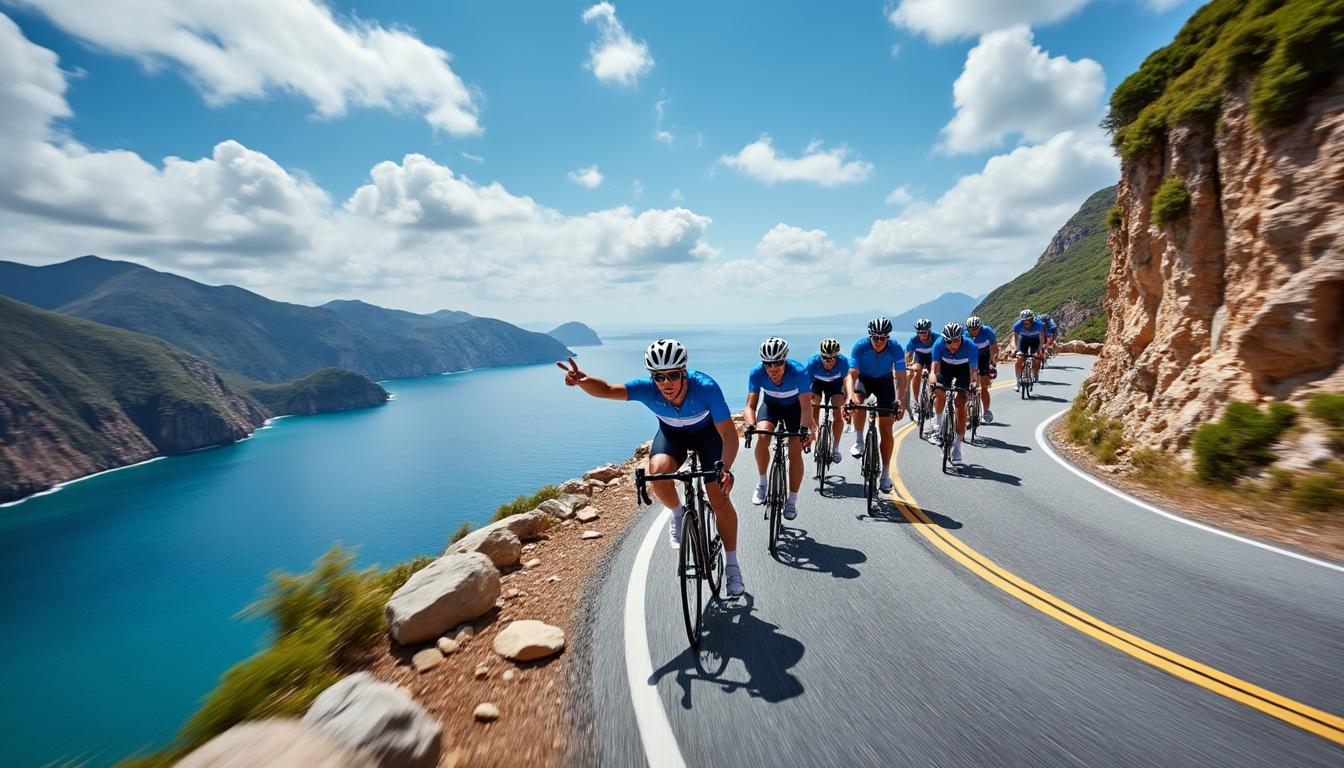
The strategic choice of the Nevers-Magny-Cours Circuit for the start of the time trial: a major asset for the Nièvre region
The Nevers-Magny-Cours Circuit, once dedicated to motor sports, is now hosting new forms of sporting challenges, such as the Paris-Nice 2025 team time trial. Selected as the starting point, this iconic site offers the perfect setting for a fast and technical cycling competition thanks to its smooth tarmac and wide, secure lanes. Beyond its technical qualities, this location is a powerful symbol of the Nièvre region, which is gaining increased national and international visibility as a result.
The organisation of this stage in Nièvre, particularly through the circuit, also highlights the commitment of local authorities and Amaury Sport Organisation to promoting cycling in the region. The route passes through several municipalities, providing an opportunity to promote tourism and sport. Passing through Challuy and Sermoise-sur-Loire offers a glimpse of varied landscapes, from urban areas to nature, appealing to both riders and spectators who have come to cheer on the teams.
- 🏁 The circuit: a professional track with optimal surface
- 🌍 Promoting the Nièvre region through this high-level sporting event
- 🚴♀️ A secure and ideal route for a dynamic start
- 👥 Strong involvement of local authorities
- 📸 Opportunities to capture exceptional images for the media
| Characteristic | Benefits for running |
|---|---|
| Coating | 🛣️ Smooth and fast, reduces the risk of punctures |
| Track width | 🛤️ Enables online training and better team strategy |
| Location | 📍 Easily accessible for teams and the media |
| History | 🏆 An iconic venue with a prestigious history in motor sports |
| Visibility | 📣 Strong local and national media impact |
This alliance between motorised sporting heritage and modern cycling offers a new dynamic for the Nièvre region. Paris-Nice benefits from a setting that is conducive to a spectacular and efficient start, showcasing both the teams' abilities and the charm of the location.
The crucial role of teams in the Paris-Nice team time trial
The team time trial highlights the very essence of team cycling. Each team competing benefits from a delicate balance between riders capable of riding powerfully at the front and those responsible for supporting and protecting the leaders. This division of roles is fundamental to excelling in this event.
During the third stage of Paris-Nice, the 22 teams not only battle the distance, but also strive for the best possible coordination. For example, team leaders rely on advanced technological solutions such as GPS and radio communication to adjust the pace along the way. Perfect timing between relays saves precious seconds, which can sometimes be decisive.
This type of competition is also an opportunity to see innovative strategies evolve, particularly in terms of aerodynamics and equipment choices. Teams invest in smartwatches specifically designed for triathlon and cycling, optimising time management and performance tracking. To find out more about this equipment, discover the best triathlon watches market, which inspire high-level performance.
- 📊 Clear division of roles among runners
- 📱 Use of advanced technologies for communication
- ⚙️ Meticulous choice of materials and aerodynamic adjustments
- 🔄 Real-time strategies thanks to radio coaching
- ⏱️ Importance of timing for each relay
| Role | Function | Example |
|---|---|---|
| Leader | Keeps up the pace and pulls the group along | A powerful rider like Ben O'Connor |
| Domestic | Protects the leader and takes regular turns | The Jayco-AlUla team members |
| Team leader | Coordinates strategy and adjusts the plan in real time | Head of Amaury Sport Organisation |
For spectators, understanding these roles and tactics adds an extra dimension to the experience, transforming each stage into a real-life chess game where every second truly counts.
The impact of Paris-Nice 2025 in Nièvre and beyond: a vibrant tribute to cycling
The return of Paris-Nice with a team time trial stage in Nièvre is much more than just a sporting competition. It is part of a local drive to promote cycling, in line with the expectations of local authorities and enthusiasts. This event offers exceptional visibility for the region, both in terms of tourism and sport.
Beyond the race itself, the economic and cultural benefits are significant: local hotels, restaurants and shops enjoy a significant influx of visitors, and sports facilities are strengthened. Furthermore, this stage embodies a genuine call to take up cycling and raise awareness of the importance of physical preparation and collective performance.
This growing popularity also stimulates the fight against challenges related to sport, such as the preservation of essential performance equipment, in line with the latest news on the race against time to protect sporting resources. This mobilisation helps to ensure that sport continues to be a source of inspiration and progress.
- 🌟 Increased media visibility for Nièvre and cycling
- 💼 Positive economic impact for local stakeholders
- 🚵♂️ Encouraging amateur sports participation
- 🛡️ Raising awareness about protecting sports equipment
- 🤩 A unifying and festive event for all spectators
| Impact | Benefits for Nièvre |
|---|---|
| Economical | 💰 Increase in hotel bookings and occupancy rates |
| Media-savvy | 📺 National and international coverage promoting the region |
| Athletic | 🚴♀️ Infrastructure development and local volunteering |
| Cultural | 🌐 Highlighting local heritage and identity |
| Social | 🤝 Cohesion and gathering around a popular event |
What is a team time trial?
It is an event in which several cyclists from the same team ride a course as a group, aiming to achieve the best collective time by taking turns to maintain a high and constant speed.
Why was Nièvre chosen for this stage?
Nièvre offers an ideal setting with technical and picturesque roads, as well as strong local commitment, enabling the organisation of a safe and spectacular stage that promotes the region through a large-scale event.
What are the challenges for the teams in this time trial?
Performing well here has a major impact on the overall ranking. Teams must be perfectly synchronised to minimise air resistance, maintain a steady pace and manage their relays effectively in order to build up a significant lead.
How does technology enhance team performance?
Thanks to real-time communication tools, GPS and smartwatches, teams can adjust their pace and refine their strategies directly during the race, optimising time management and collective effort.
How does this comeback influence local cycling?
It boosts sporting activities in Nièvre, promotes local infrastructure and generates genuine public enthusiasm, while also raising the region's profile through the media.
 English
 French
 Spanish
 German
 Dutch
 Italian
 Portuguese