
In December 2025, the world of connected watches dedicated to health and sport is reaching new heights in terms of technology and innovation. With more than 113 models analysed, every user can now find the rare pearl adapted to their specific needs, whether they are a fitness enthusiast, an intensive sports fan, or simply concerned about their day-to-day well-being. These devices, which combine elegance and efficiency, have become indispensable companions, offering precise monitoring of physical condition thanks to increasingly advanced biometric sensors. Wearable technology is making a lasting impact, transforming the way we manage our health and improve our sporting performance.
Between the accuracy of the measurements, the extended battery life, the ergonomics of the watches and the diversity of functions on offer, the choice can seem complex. Yet the wealth of models available means there's something for everyone, from simple smartphone relay watches to full-featured, 4G-compatible smartwatches. Let's take a look together at this detailed analysis, which reveals the key strengths of the best models, as well as the major trends shaping the market at the end of 2025.
- 🔥 113 connected watches analysed for an exhaustive selection.
- 💪 Focus on sports and health monitoring via advanced biometric sensors.
- 📱 iOS and Android compatibility, a key criterion when choosing your watch.
- 🔋 Autonomy and design: the decisive criteria for everyday use.
- 🎯 Varied functions ranging from simple notification to complete fitness management.
Comparison of the best connected health and sports watches in December 2025
The market in December 2025 is marked by fierce competition between manufacturers, with a huge range from ultra-precise devices for professional athletes to affordable models for the wellness-conscious general public. Leading brands such as Apple, Samsung, Huawei, Xiaomi and Honor continue to play a major role, while specialists such as Garmin and Fitbit stand out thanks to their expertise in sport and fitness.
The Apple Watch continues to lead the way in terms of sales, thanks to its close integration with the iOS ecosystem and its iconic rectangular screen, offering an intuitive touch interface. However, the trend for 2025 is also towards watches with more traditional circular dials, appreciated for their aesthetics and ergonomics by Android users. Each model is evaluated according to precise criteria:
- 🏃 built-in GPS for accurate monitoring of outdoor activities.
- ❤️ Heart rate sensors and in-depth biometric analysis.
- 💧 Watertightness for use in water sports.
- 🔋 Battery life tested in real-life conditions over more than two weeks.
- 🎨 Design and comfort for comfortable portability for everyday wear and sport.
A prime example is the Garmin Forerunner 970 range, renowned for its precision and advanced running features, now rivalling the legendary Fenix. You can find out more about this model and others in our comparison interface to find the watch best suited to your requirements (read our in-depth analysis).
The best smartphone compatibilities: iOS versus Android
Choosing a watch that is compatible with your phone is essential. iPhone owners naturally benefit from better synergy with the Apple Watch. On the other hand, Android mobile phone users now have access to a wide range of models, but the availability of certain functions is sometimes limited. For example, notifications and music control are not always fully operational on all Android-compatible models.
Some watches are moving towards universal compatibility, integrating native applications compatible with both iOS and Android. This makes it easier to monitor health and performance. Models from Fitbit and Withings are particularly aimed at demanding users looking for a good balance between health and fitness. For a suitable selection, see our 2025 guide to GPS and cardio watches.
The choice between needle and touch screens
While the majority of connected watches are equipped with a touch-sensitive LCD or Amoled screen, allowing full interactivity, some opt for a traditional dial with hands coupled with a few connected functions. The latter models offer much more generous battery life, sometimes reaching several weeks compared with one or two days for a full touchscreen.
The choice depends on your lifestyle: a touchscreen offers a wealth of functions - GPS, alerts, voice commands - while a hybrid dial offers a more classic look and basic tracking without going into the depth of analysis possible with digital technology. So, for sport and intensive tracking, the touchscreen remains the undisputed benchmark.
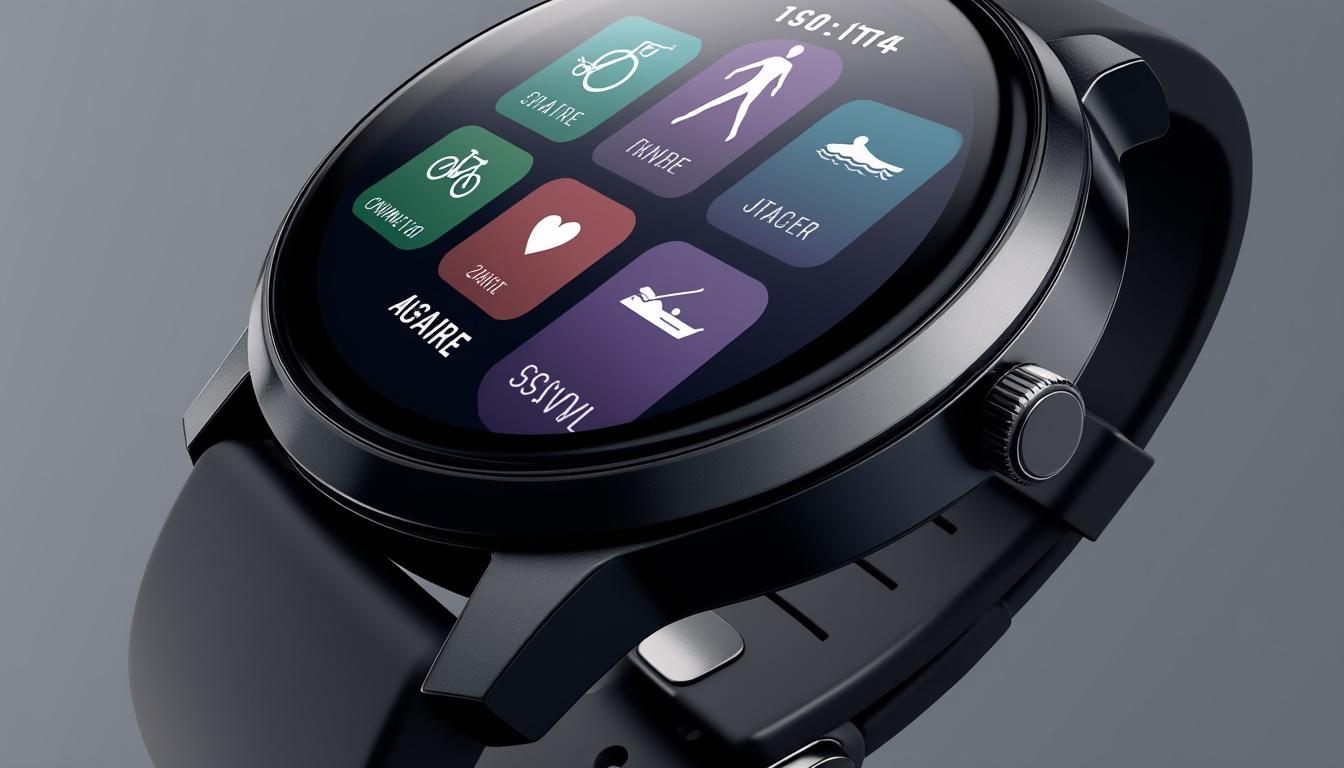
Wearable technology and biometric sensors: revolutionising health monitoring in sport
The essence of connected watches in 2025 lies in the sophistication of the integrated biometric sensors. These devices not only measure heart rate, but also analyse cardiac variability, blood oxygen saturation, skin temperature and even the electrocardiogram (ECG) for more accurate diagnoses.
In sports, this data can be used to refine training programmes and adopt a personalised approach to improve performance. For example, when monitoring a run, the watch can automatically detect the type of effort, adjust intensity recommendations, or indicate the best time to recover.
By integrating artificial intelligence into these watches, it is now possible to establish a genuine «predictive analysis» of day-to-day physical fitness. Thanks to refined analytical feedback, users receive tailor-made advice to optimise their well-being and prevent injury.
For fitness enthusiasts, these functions mean dynamic support, making it easier to achieve health goals while monitoring stress and sleep quality, crucial periods for recovery. In this way, connected watches no longer simply collect data, but become intelligent coaches on your wrist.
Sport and well-being mode: a range of functions for all profiles
There are more and more options dedicated to sport: running, cycling, swimming, cardio, yoga, walking modes, and even specific support for indoor sports. Some models automatically detect the type of activity, adapting data collection in real time.
At the same time, well-being is fully taken into account. Continuous monitoring of resting heart rate, measurement of breathing quality and personalised alerts encourage a more balanced lifestyle. An appropriate watch will also remind its owner to get moving after long periods of inactivity, a fundamental health asset in our modern societies.
Autonomy and design: balancing style and functionality
Autonomy remains a key criterion. Connected watches with Amoled screens offer exceptional display quality, but consume more energy. On the other hand, hybrid models or those with energy-efficient LCD screens can last for several days, or even weeks, without recharging.
Design, meanwhile, is evolving slowly but surely. In December 2025, the majority of smartwatches will adopt a circular shape, favoured by many users for its timeless elegance. Others prefer the rectangular format characteristic of the Apple Watch, allowing optimum use of screen space and easy access to touch functions.
Wearing comfort is also essential, especially for intensive sports use: silicone straps or hypoallergenic materials are recommended. The adjustability of the strap and the watch's resistance to perspiration and shocks have a direct impact on the pleasure of using it.
| ⚙️ Criteria | 📊 Importance | 🛠 Example |
|---|---|---|
| Autonomy | 🔥 review | More than 7 days on certain hybrid models |
| Watertightness | 💧 Essential for water sports | IP68 and higher |
| built-in GPS | 🏃 Essential for sports monitoring | Garmin Forerunner 970 in the lead |
| Smartphone compatibility | 📱 Essential according to OS | Apple Watch for iOS, Fitbit for Android |
| Comfort | 🎯 Important for daily use | Adjustable, lightweight silicone strap |
The latest generation of connected watches and their impact on the market
Beyond simple hardware innovation, the watches of December 2025 will incorporate significant software advances, with frequent updates to optimise performance and battery life. The use of machine learning algorithms will refine biometric analyses, offering ultra-personalised recommendations.
The market is also seeing a boom in 4G-compatible models, which are autonomous in terms of communication, freeing the user from the phone during physical activity. However, this is still an expensive segment, often reserved for highly committed professionals and sportsmen and women.
Numerous tests have shown that this type of smartwatch offers unprecedented freedom, encouraging uninterrupted activity and better management of the pace of life. To find the watch that's right for your sporting activities, check out our article on the must-have sports models (top 6 connected sports watches).
Practical use and recommendations for an informed choice
To make the right purchase, it's essential to clearly identify your needs. Here are a few key points:
- 🎽 Beginner : opt for a simple model with basic modes and notifications.
- 🏅 Regular sportsman : look for precise GPS and in-depth heart rate analysis.
- 💼 Daily use : focus on comfort, autonomy and connected versatility.
- 💡 Tight budget: Various models offer excellent value for money, including those from Garmin and Xiaomi.
For keen runners, the Garmin Vivoactive 6 has established itself as a must-have, combining functionality with an attractive price tag. What's more, sporting events are being monitored as closely as possible thanks to smartwatches, as demonstrated by the recent organisation of the Paris-Nice team time trial in Nièvre (find out more about this event).
What are the key functions of a connected sports watch?
Key features include integrated GPS, heart rate tracking, sleep analysis, automatic activity detection and notification management.
How do I choose a watch that's compatible with my smartphone?
Check that it is compatible with your operating system (iOS or Android) and the features it supports to avoid disappointment.
What autonomy can you expect from a health and sports smartwatch in 2025?
Autonomy varies from 1 to 2 days for sophisticated touch screens, and can exceed 7 days for hybrid models with classic dials.
Are connected watches reliable for tracking sporting activities?
Specialist models such as Garmin offer high levels of precision thanks to advanced sensors and high-performance algorithms.
Is it possible to use a connected watch to monitor your health outside of sporting activity?
Absolutely, they measure sleep quality, oxygen saturation and stress levels, and offer personalised advice on wellbeing.
 English
 French
 Spanish
 German
 Dutch
 Italian
 Portuguese